Are You Building Beyond Yourself?
C12 Southwest Florida | GLS26 Reflection
Are You Building Beyond Yourself?
A reflection on David Ashcraft's GLS26 message about succession, humility, and stewardship.
Building Beyond Our Own Leadership
One of the most challenging sessions I heard at GLS26 came from David Ashcraft.
David spent decades leading LCBC (Lives Changed By Christ) Church, helping grow it from a congregation of roughly 150 people to an organization serving more than 22,000. When he spoke about succession, he was not teaching something he had simply studied. He had lived through it.
His message caused me to think about how we measure whether we have built a successful organization. Most of us naturally look at growth, financial health, the strength of the team, customer relationships, or the impact the organization is having. Those things certainly matter, but David raised another consideration that I have continued thinking about.
That takes the conversation about succession well beyond an eventual retirement or ownership transition. It asks whether we are developing people, strengthening systems, sharing responsibility, and building something capable of flourishing without everything continuing to depend upon the person at the top.
For a business owner, that question can become uncomfortable fairly quickly.
Succession Begins Earlier Than We Think
David identified time as one of the most important factors in a healthy transition. Time can be your greatest friend if succession planning begins early enough, or it can become your enemy when the process is continually postponed.
His own transition was something he thought about and prepared for over a period of roughly 10 to 12 years. He suggested that even 18 to 24 months should be viewed as a minimum planning window for most significant transitions.
That makes sense when we consider everything involved. Succession is not simply identifying the next person.
Those things cannot simply be handed over at the end of someone's tenure.
Yet I have known plenty of business owners who will spend months planning for the purchase of a building, a major piece of equipment, or a new market while giving considerably less thought to whether the business they are building is becoming increasingly dependent upon them.
Perhaps that is one reason succession deserves our attention long before we think we need it.
Then David Talked About Pride
David said that even a very good succession plan can be sabotaged by the leader's pride. The warning signs are easy to recognize in someone else and considerably harder to recognize in ourselves.
Successful leaders are particularly vulnerable because there may be a great deal of truth mixed into those thoughts. The founder probably does understand the company better than anyone else. The next leader may not be ready today. The owner probably does have more to contribute.
But somewhere along the way, good stewardship can become possessiveness. Leadership can become closely connected to identity, and years of experience can gradually reinforce the belief that the organization simply cannot function as well without us.
That can make it difficult to recognize the difference between protecting something we have been entrusted with and holding onto something too tightly.
What Happens When the Transition Actually Works?
David was especially candid about what happened after his own transition.
He had spent years working toward the goal of LCBC flourishing after his departure, and then it did. Yet he found himself wanting people to remember how much of that success had begun while he was still leading. New locations had been planned during his tenure. Resources had been put into place before he left. There were moments when he wondered whether people fully appreciated what he had contributed.
I appreciated his willingness to admit that because I suspect many successful leaders would understand the tension.
That may be one of the harder parts of developing an organization that can continue beyond us.
If the next leader is truly successful, they may change things we created. They may receive credit for something we started. They may lead differently than we did, and the organization may respond well.
The question then becomes whether we can genuinely celebrate that success or whether some part of us still needs the organization to remain dependent upon the way we led it.
A Stewardship Question
For Christian leaders, I believe there is an even deeper issue here.
We talk frequently about stewardship when it comes to finances, and we understand that what God has entrusted to us should be handled wisely. I believe leadership deserves to be viewed through that same lens.
The company, the influence, the employees, the relationships, the opportunity, and the position itself were never intended to become our identity.
His point was that pride may be one of the easiest ways for a leader to do exactly that. Pride can stop listening to wise counsel, become overly concerned about credit, resist releasing control, and eventually convince us that what God has entrusted to us cannot possibly continue without us.
Humility allows a leader to see the organization differently. God was at work before we arrived, He has been at work while we have been here, and He will still be at work when someone else eventually carries responsibilities we once held.
That does not diminish a leader's contribution. I think it simply puts that contribution in its proper place.
Who Can Tell You When You Are Holding On Too Tightly?
Succession involves attorneys, accountants, financial advisors, estate plans, ownership structures, and countless operational decisions. Good leaders should use all of those resources.
But David's message made me think about another resource we may need.
Those conversations require tremendous trust because the person asking the question cannot simply understand the mechanics of succession. They need to understand the leader.
I think that is why this subject deserves attention long before retirement appears on the calendar.
One Leadership Question to Consider
Succession is not simply an event that happens at the end of leadership. In many ways, it is reflected in how we lead while we are still very much engaged in the organization.
Are we developing people who can carry greater responsibility? Are we strengthening systems that do not depend upon our personal involvement? Are we allowing others to build relationships, make decisions, and grow into leadership?
David Ashcraft's message gave me a broader way to think about what it means to build a successful organization. Success is certainly about what we accomplish while we are leading, but perhaps part of good stewardship is also preparing people and building an organization that can continue to grow beyond our constant presence.
For owners, CEOs, founders, and senior leaders, I think that leaves us with a question worth considering:
Are we building an organization that grows because of our leadership, or one that can only grow as long as everything continues to depend upon us?
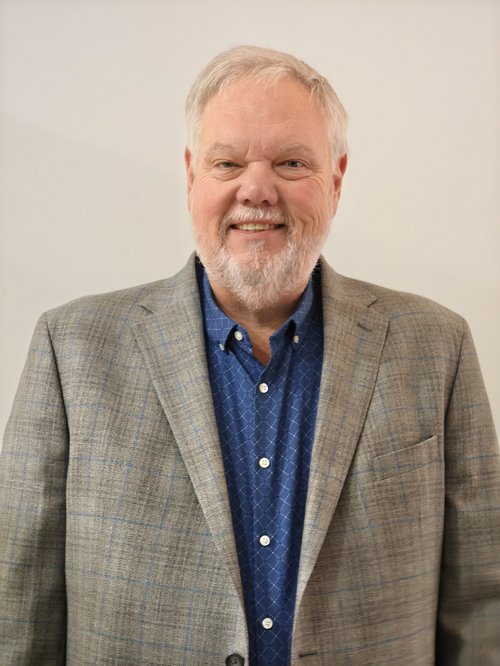
Jamie Shedden
C12 Chair · Southwest Florida
Leadership Is Stewardship
C12 Southwest Florida gives Christian CEOs and business owners a trusted peer advisory table where succession, stewardship, humility, and long-term organizational health can be discussed with clarity and counsel.